Waldorf, Maryland
Egress Window Well Drainage in Waldorf, MD
Egress Window Well Drainage in Waldorf, Maryland, laid out to IRC R310, permitted, and drained properly before the well is backfilled.
Waldorf, Maryland
Egress Window Well Drainage in Waldorf, Maryland, laid out to IRC R310, permitted, and drained properly before the well is backfilled.
The call usually comes the morning after a heavy rain. A Waldorf homeowner went downstairs, looked at the basement window, and found the well outside it filled like an aquarium, water pressed against the glass and starting to weep through the frame. The window gets blamed first. Nine times out of ten the window is fine and the drain under the well is missing, crushed, or was never connected to anything at all.
Waldorf Egress Window Company corrects well drainage across Waldorf and Charles County, and drainage is the hill our whole trade stands on. Licensed and bonded under MHIC license 155221, we rebuild gravel beds and run drain lines the way they should have been run at the original install: to the perimeter drainage or the sump, in solid pipe, with fall the whole way.
A well is a hole lined with steel, and every drop of rain that falls into it has to go somewhere. In sandy soil, some of it percolates away and a marginal drain can keep up. Charles County clay does not work that way. Once the clay around a well is saturated, it holds water the way a bathtub holds water, and the well becomes the lowest point in that tub.
That is why the failure pattern here is so consistent. A well set without a drain, or with a short stub of perforated flex pipe buried in the excavation, behaves fine through dry months. The first long storm saturates the clay, the flex pipe, crushed under backfill or clogged with fines, moves almost nothing, and the well fills until it finds the window seams.
A drainage correction starts by opening the well floor and reading what the original builder left behind. We excavate to the base, remove the failed or silted gravel, and check whether any drain line exists, where it runs, and whether it actually connects to the footing drain or sump. Guessing at that connection is how wells get "fixed" twice, so we verify it before rebuilding anything.
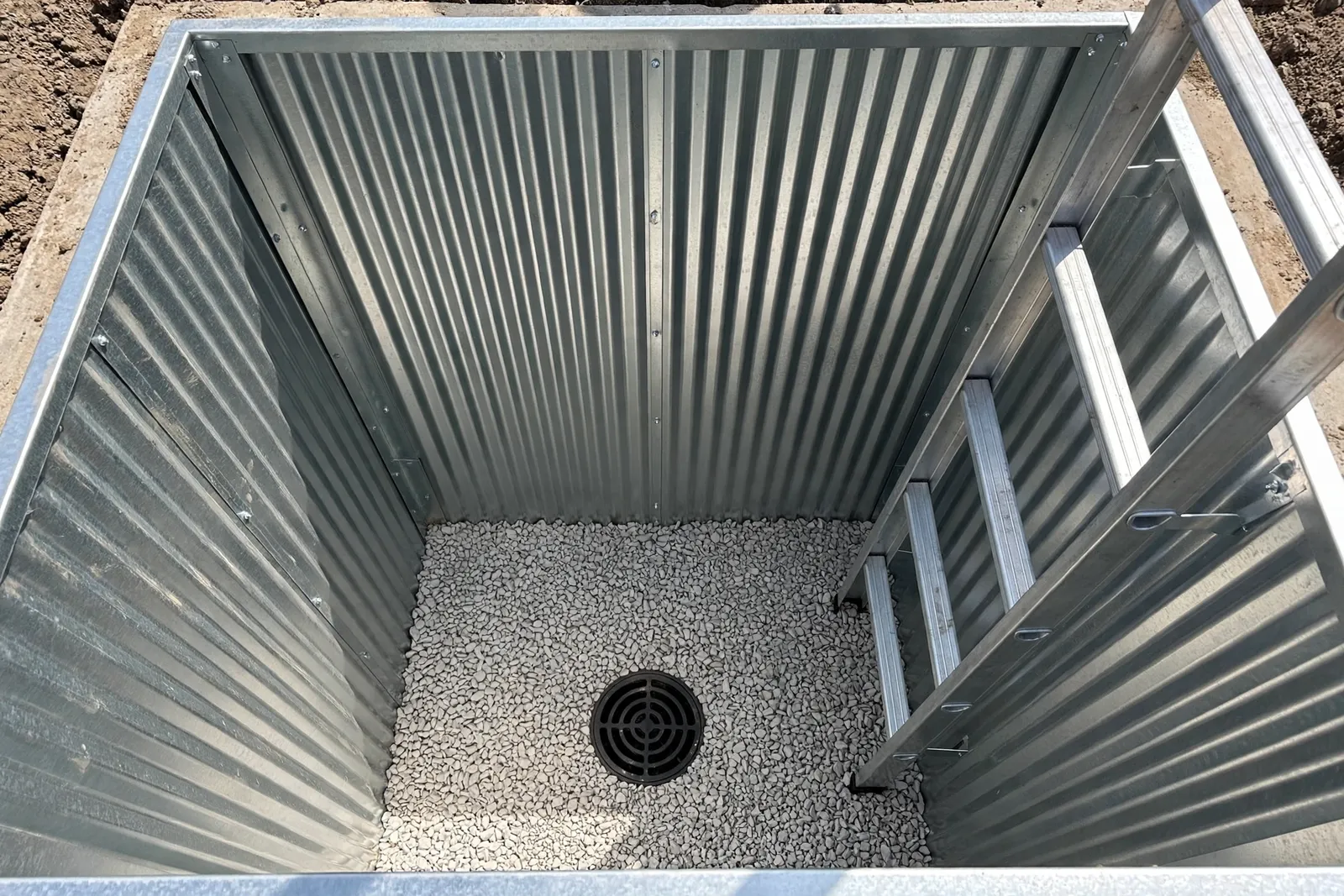
The rebuild lays a fresh gravel bed over the base, sets a drain in solid PVC rather than perforated flex that collapses under load, and runs it to a verified tie in point with continuous fall. Where the sump is the destination, we confirm the pump is working before tying in, since a perfect drain line into a dead sump is no correction at all. We then flood test the finished well with a hose before backfilling the edges: water goes in, water leaves, the well stays dry.
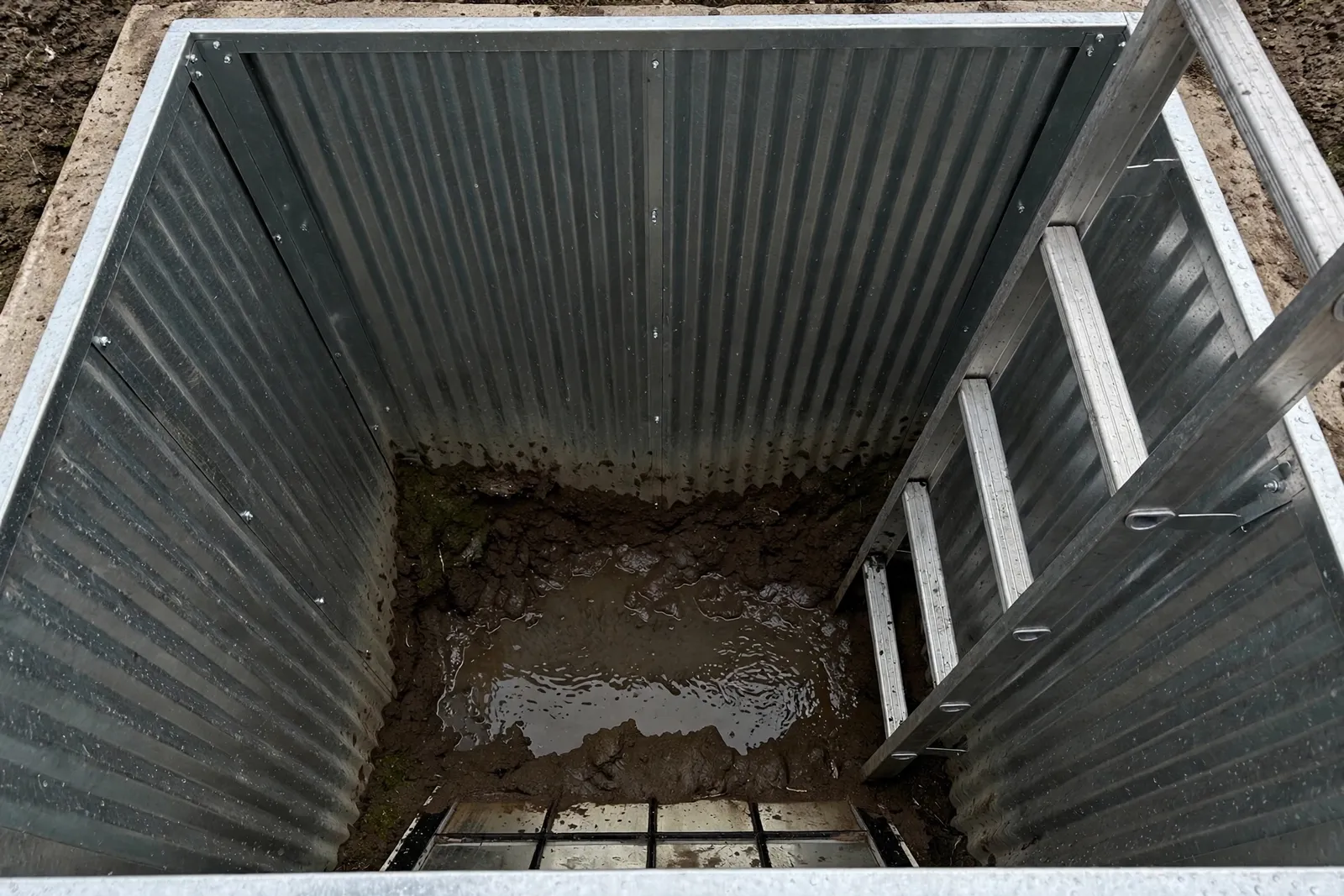
A St. Charles home with a finished basement bedroom had a well that ponded after every long rain, leaving damp staining on the wall under the window. We opened the well floor and found the gravel bed had been laid with no drain line at all. We rebuilt the bed, ran a solid PVC drain to the sump with continuous fall, confirmed the pump cycled, and flood tested the well until it drained dry.
Correcting a well that was set without working drainage usually runs $800 to $2,000 in the Waldorf market. A well where a drain line exists but is clogged or crushed near the well sits at the lower end, since the run to the tie in point is already established. Wells with no line at all, where we rebuild the bed and run new solid pipe across the excavation to the perimeter system or sump, take the upper part of the range. Distance to the tie in point, depth of the well, and what has to be moved or dug through on the way set the final figure, and the quote covers the flood test at the end, so you see the well drain before we call it corrected.
Every installer in this market knows the drain is the part the homeowner cannot see, which makes it the first thing cut from a cheap bid. Our position is the opposite: the drain is the job, and the well is the frame around it. A beautiful galvanized well with no drain is a decorative bucket, and in Charles County clay it will fill. When we price drainage corrections we are really pricing the excavation, the bed, the pipe run, and the verification, in that order, because that is the order that decides whether your basement wall stays dry.
If your well holds water after rain, or you can see damp staining on the wall below a basement window, send the details through the quote form at the bottom of this page. We will open the well floor, show you exactly what is and is not connected down there, and price the correction in writing before the rebuild starts.
Drainage corrections in Waldorf usually run $800 to $2,000. Clearing or replacing a short failed section near the well costs less; rebuilding the gravel bed and running a new drain line to the perimeter drainage or sump costs more, because most of the work is excavation and pipe.
Because the water has nowhere to go. Wells collect direct rainfall, and in Charles County clay the surrounding soil will not absorb it once saturated. A well needs a gravel bed with a drain tied into the footing drain or sump. Wells that flood almost always turn out to have no drain, or a crushed and clogged one.
It ties into the home's perimeter footing drainage or runs to the sump pit, the same systems that handle the rest of the foundation's water. We verify the connection point is real and working before tying in, and we flood test the finished well so the drain proves itself before we leave.
Often, yes. If the well shell is sound and set at the right size, we can open the floor, rebuild the bed, and run the drain without touching the shell. If the shell is rusted through or bowed, drainage work alone will not hold, and we will recommend correcting both while the excavation is open.
Most corrections finish in one to two working days. The excavation and bed rebuild take the bulk of the first day, with the pipe run, tie in, and flood test following. Long runs to a distant sump or deep wells can use the second day fully.
No. A cover sheds leaves and part of the direct rain, and it helps keep debris off the drain, but it is not a seal and it does not move water out of the well. If a well ponds, the correction is under its floor. We fit covers after drainage works, not instead of it.
Tell us about your basement and the room you want to make legal. We read every request that comes in and respond with the next steps, starting with a site visit, real measurements, and the R310 math worked for your exact opening.
Licensed and bonded · MHIC license 155221 · Veteran friendly. Prefer to talk it through first? Send the form and we will call you back at the number you give us.